 Arogya Times
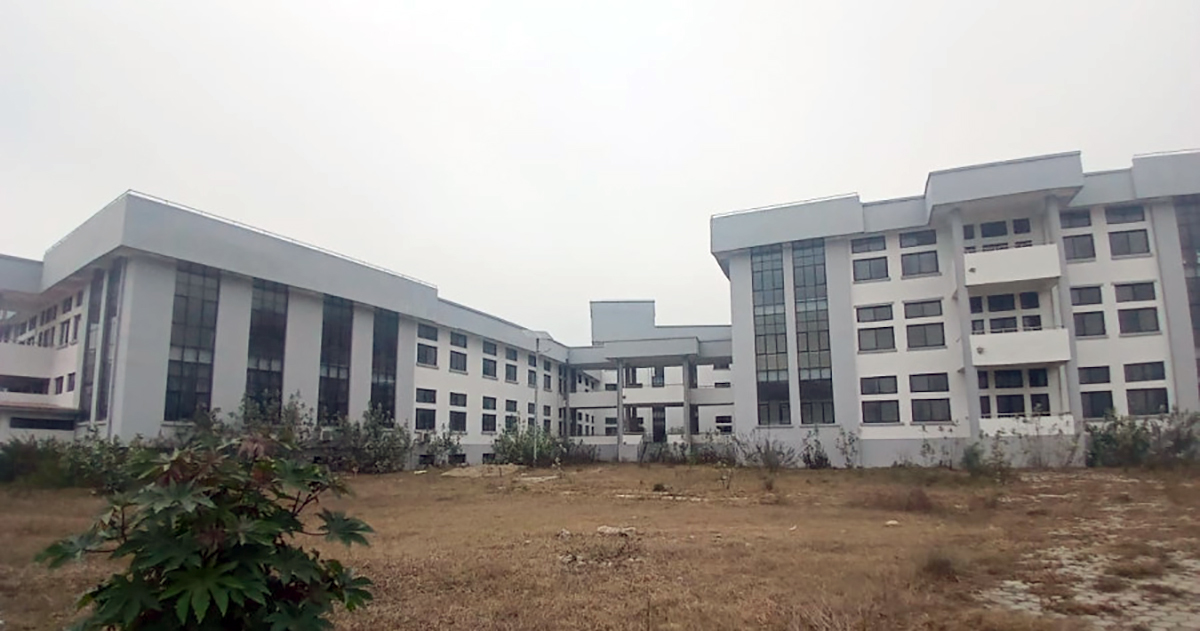
The Nepali government has approved Geta Hospital in Kailali to operate as the teaching hospital of the Shahid Dasharath Chand University of Health Sciences, marking a significant step toward expanding medical education and specialist healthcare services in the country’s far-western region.
The decision was endorsed by the Cabinet on Wednesday, providing the legal and institutional framework required to conduct clinical training for MBBS students and other health science programmes.
Why Is Geta Hospital Important?
Built with government investment in Geta, Kailali, the hospital is regarded as one of Sudurpashchim Province’s most modern healthcare facilities. It currently provides outpatient, emergency, surgical, obstetric and gynaecology, paediatric, orthopaedic, ophthalmology, ear, nose and throat (ENT), dental, radiology and laboratory services.
The government envisions the hospital as a centre for medical education, research and specialised healthcare under the Shahid Dasharath Chand University of Health Sciences.
The plan to establish a health sciences university in Geta has been under discussion for several years. In 2022, the Cabinet approved the establishment of the university by utilising the hospital’s infrastructure. Since then, the government has gradually completed the legal framework, institutional structure, appointments of university officials and other academic preparations.
In this year’s national budget, the government also announced plans to launch medical education programmes, including MBBS. During the initial phase, the university is expected to offer MBBS, Bachelor of Science in Nursing, Medical Laboratory Technology and Optometry programmes.

How Large Is The Hospital?
Geta Hospital was originally designed as a 600-bed teaching hospital, although it has yet to become fully operational.
At present, services are being delivered through a 50-bed facility, while the government plans to expand operations in phases, beginning with 300 beds.
The hospital currently receives around 50 to 80 patients each day. Hospital officials expect the number to rise significantly as more specialists, medical equipment and clinical services become available.
Expansion of diagnostic services, including CT scanning and laboratory facilities, has previously been delayed due to administrative hurdles.
Where Do Patients Come From?
Although located in Kailali, the hospital serves patients from across Sudurpashchim Province, including Kanchanpur, Dadeldhura, Doti, Achham, Baitadi, Bajhang, Bajura and Darchula.
Given its proximity to the Indian border, Nepali citizens living in border areas also seek treatment at the hospital. Hospital authorities say it has gradually reduced the need to refer patients to Kathmandu or hospitals in India for complex medical care.
What Are The Expected Benefits?
The approval allows the hospital to begin clinical training for students enrolled in MBBS and other health science programmes, creating opportunities to produce more doctors, nurses and allied health professionals within the region.
Teaching hospital status is also expected to strengthen specialist services, increase bed capacity, attract qualified medical professionals and expand research activities. In the long run, the move is expected to improve access to quality healthcare in Sudurpashchim and reduce the need for patients to travel to Kathmandu or other provinces for advanced treatment.
The decision is widely seen as a milestone in decentralising Nepal’s medical education system while strengthening healthcare services outside the Kathmandu Valley.
Arogya Times