 Arogya Times
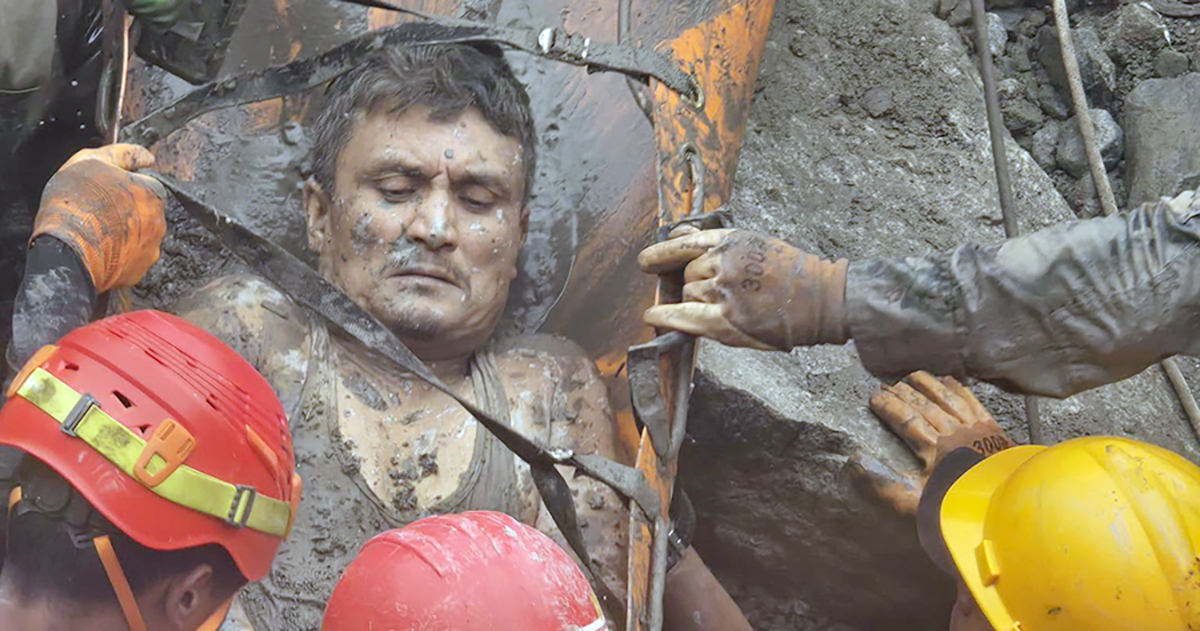
Two men rescued from inside a tunnel of the Trishuli–3A Hydropower Project after being trapped for 10 days following flooding in the Bhotekoshi River have been admitted to the Army Hospital in Chhauni, Kathmandu.
One of the rescued men, Kabir Maharjan, has been diagnosed with mild hypothermia, according to doctors involved in his treatment. The other survivor, Sanjay Shah, is reported to be out of danger.
Both men were airlifted by helicopter after receiving initial medical treatment. They are currently undergoing further treatment at the Army Hospital in Chhauni.
The two were rescued 10 days after the flood left them trapped inside the hydropower project’s tunnel. Prolonged exposure to cold water and a cold environment can cause the body’s temperature to fall, leading to hypothermia.
What is mild hypothermia?
Mild hypothermia occurs when the body’s core temperature falls below the normal range, typically between 32°C and 35°C (89.6°F–95°F). It can cause shivering, cold or pale skin, numbness, dizziness and impaired coordination.
Under normal conditions, the human body maintains a temperature of around 98.6°F (37°C). Hypothermia is generally defined as a core body temperature below 95°F (35°C).
The human body continuously produces heat through various organs under the control of the brain. Normally, a balance is maintained between the heat produced by the body and the heat lost to the surrounding environment. However, prolonged exposure to cold—particularly direct contact with cold water—can cause heat to be lost rapidly, resulting in a dangerous drop in body temperature.
In its early stages, hypothermia may cause a person to feel very cold and begin shivering. As the condition worsens, symptoms can include numbness or tingling in the hands and feet, dizziness, nausea, rapid breathing, drowsiness, and impaired coordination.
Without timely treatment, severe hypothermia can affect vital organs and become life-threatening.
Arogya Times