 Arogya Times
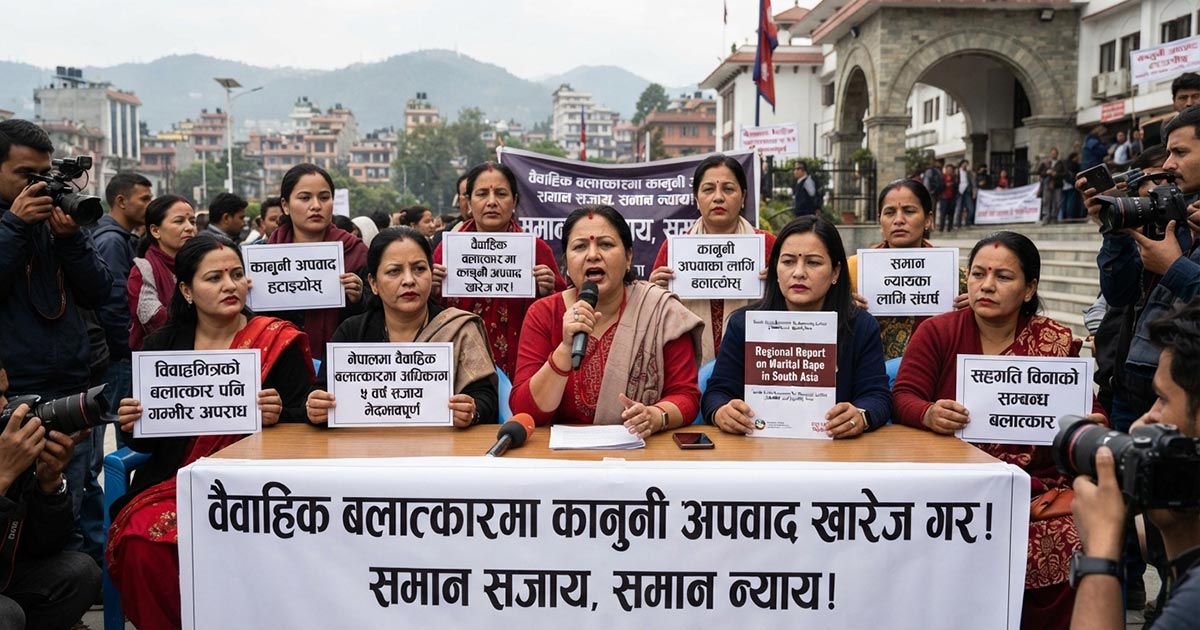
The physical and mental health consequences of sexual violence within marriage require stronger legal protection and support for survivors, a regional review has said, calling on Nepal and other South Asian governments to criminalise marital rape without exception and impose penalties equivalent to those for other forms of rape.
The review, Challenging the Marital Rape Exception in South Asia, finds that Nepal imposes a maximum five-year prison sentence for marital rape, significantly lower than the six to 20 years prescribed for other rape offences.
Produced by the South Asian Movement for Accessing Justice (SAMAJ), a regional coalition with Equality Now as its secretariat, the review examines marital rape laws across eight South Asian countries.
It finds that only the Maldives recognises marital rape as a crime in all circumstances and provides the same penalties as for other rape. India, Bangladesh and Sri Lanka continue to exempt husbands from rape charges in most circumstances.
In Nepal, the Supreme Court recognised in 2002 that sexual intercourse without consent constitutes rape regardless of the relationship between the individuals. However, subsequent legal amendments introduced a lower penalty for marital rape. In 2007, the Supreme Court ruled that the disparity in sentencing was discriminatory and unconstitutional.
The National Penal Code 2017 increased the maximum sentence for marital rape to five years but did not remove the distinction. The absence of a specified minimum sentence has also raised concerns about offenders receiving short prison terms.
The review warns that lighter penalties can undermine deterrence and expose survivors to further abuse, particularly when convicted perpetrators return to the family home.
Ranjeeta Silwal of Equality Now said unequal sentencing could reinforce the perception that sexual violence within marriage is less serious and that marriage gives husbands an entitlement to their wives’ bodies.
The review urges governments to repeal marital rape exemptions, recognise the absence of free and voluntary consent in rape laws, and ensure penalties are proportionate to the gravity of the offence. It also calls for consent-related training for police, prosecutors and judges, alongside legal aid and support services for survivors.
The findings come as the 16 Days of Activism against Gender-Based Violence campaign begins, renewing calls for stronger legal protection against sexual and gender-based violence across South Asia.
Arogya Times