 Arogya Times
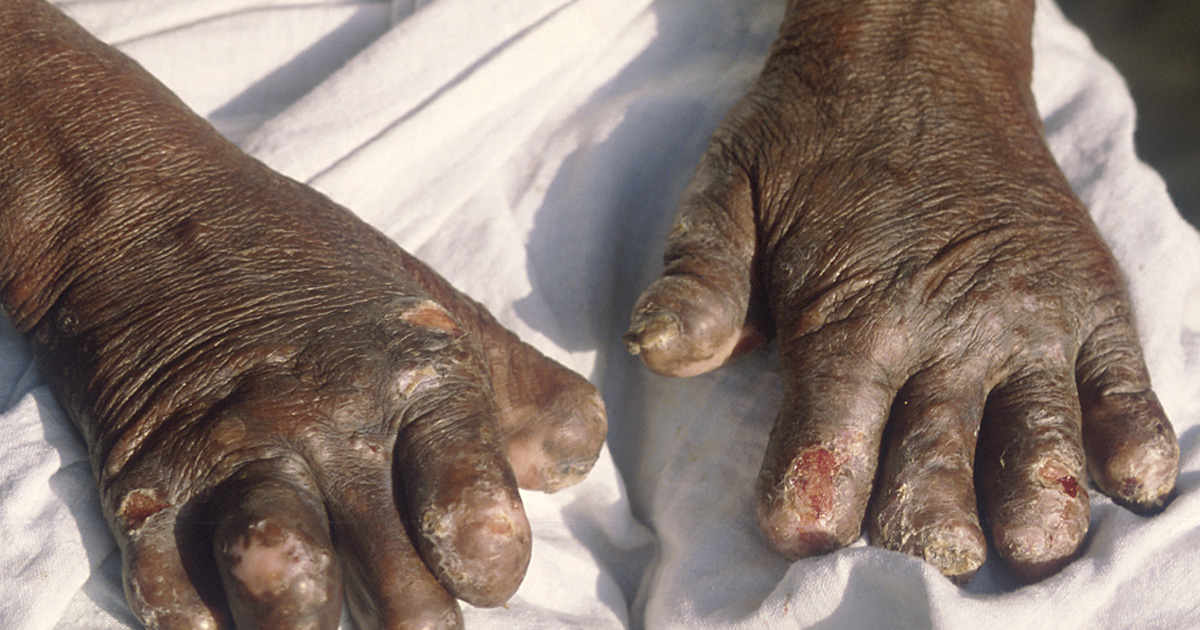
More than a decade after Nepal declared leprosy eliminated as a public health problem at the national level, the disease continues to pose a challenge in 16 districts where the prevalence remains above the elimination threshold.
According to data from the Ministry of Health and Population, leprosy prevalence in these districts is still higher than one case per 10,000 population—the benchmark set by the World Health Organization (WHO) for declaring the disease under control. Under WHO standards, leprosy is considered eliminated as a public health problem when prevalence falls below one case per 10,000 people.
Nepal officially announced the elimination of leprosy as a public health problem in 2010. However, the continued detection of new cases and the persistence of high prevalence rates in several districts indicate that the disease remains a significant public health concern.
Data from the fiscal year 2024/25 (2081/82 BS) show that Nepal’s national leprosy prevalence rate stands at 0.86 per 10,000 population. During the same period, 2,404 new leprosy patients were identified across the country.
Health experts say that although leprosy is a curable disease when diagnosed and treated early, social stigma, lack of awareness, and limited access to healthcare services often lead patients to seek treatment late. Delayed diagnosis increases the risk of disability and long-term complications.
The Ministry of Health has prioritized active case detection, expansion of screening programs at the local level, and efforts to reduce new infections to zero. Authorities are also working to strengthen integrated leprosy control programs and community-based awareness campaigns.
The government currently provides free diagnosis and treatment for leprosy patients. Individuals who complete treatment receive transportation support of NPR 1,000, while additional financial assistance is available for those facing complications. Free assistive devices and necessary reconstructive surgeries are also provided to help manage disabilities caused by the disease.
According to the ministry, special surveillance, active case-finding campaigns, and public awareness programs will be intensified in districts where prevalence remains above the target threshold. The government aims to bring all districts below the elimination benchmark in the coming years.
Public health experts emphasize that while Nepal has made significant progress in controlling leprosy, the fact that 16 districts still exceed the elimination threshold remains a matter of concern. They stress the need for early diagnosis, uninterrupted treatment, and stronger efforts to eliminate stigma and discrimination associated with the disease.
Arogya Times